Showing posts with label Agile. Show all posts

How Tough is the PMI-ACP Exam Really

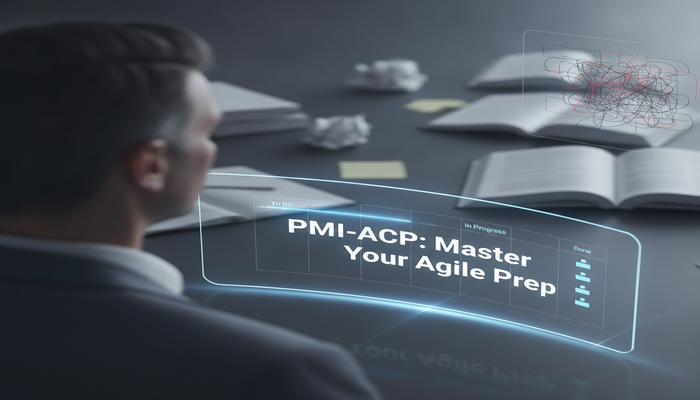
A focused professional intently reviewing a strategic study plan for the PMI-ACP exam, surrounded by subtle agile tools, conveying determination to conquer the exam's difficulty. The image shows the text 'PMI-ACP: Conquering the Difficulty'.

Embarking on the journey to earn the PMI Agile Certified Practitioner (PMI-ACP) certification is a significant step for anyone deeply invested in agile principles and practices. But as with any esteemed certification, a common question arises: How tough is the PMI-ACP exam really? It's a valid concern for prospective candidates who are about to invest their time, effort, and resources into this challenging but rewarding endeavor.

The PMI-ACP is more than just another credential; it's a testament to your understanding and application of agile methodologies across various frameworks. It signifies your capability to lead and participate in agile projects effectively. However, the path to certification is not without its hurdles. This comprehensive guide aims to provide a realistic, supportive, and honest perspective on the difficulty of the PMI-ACP exam, offering insights into what makes it challenging and how you can strategically prepare to overcome these obstacles.

Understanding the PMI-ACP Certification Landscape

The PMI Agile Certified Practitioner (PMI-ACP) is a specialized certification offered by the Project Management Institute (PMI), designed for professionals who work on agile teams or whose organizations are adopting agile approaches. It validates an individual's knowledge of agile principles, practices, tools, and techniques across various agile methodologies such as Scrum, Kanban, Lean, extreme programming (XP), and Test-Driven Development (TDD).

Unlike some certifications that focus on a single agile framework, the PMI-ACP exam evaluates a broader understanding of agile principles and the ability to apply them in diverse project scenarios. This comprehensive scope is one of the key factors contributing to its perceived difficulty, as it requires candidates to move beyond rote memorization and embrace a truly agile mindset. For a deeper dive into agile practitioner certifications, consider exploring this guide on becoming an agile practitioner interested in PMI-ACP certification.

Key Exam Details for the PMI-ACP

Before delving into the subjective experience of toughness, let's establish the objective parameters of the PMI-ACP exam:

  • Exam Name: PMI Agile Certified Practitioner
  • Exam Code: PMI-ACP
  • Duration: 180 Minutes (3 hours)
  • Number of Questions: 120 multiple-choice questions
  • Passing Score: PMI does not publish a specific passing percentage. Instead, performance is evaluated as "Above Target," "Target," "Below Target," or "Needs Improvement" across different domain areas. This psychometric scoring model assesses your overall competency rather than a simple pass/fail based on a raw score.
  • Exam Price:
    • PMI Member Price: USD $435
    • PMI Full Price: USD $495

These details provide a foundational understanding of the exam's structure and administrative aspects, but they don't fully convey the cognitive challenge involved.

PMI-ACP Eligibility Requirements: The First Hurdle

One of the initial indicators of the PMI-ACP's rigor lies in its eligibility requirements. PMI ensures that only experienced professionals who genuinely understand project environments are qualified to sit for the exam. Meeting these requirements can itself be a challenging process for some candidates.

To be eligible for the PMI-ACP, you must meet the following criteria:

  1. Secondary degree (high school diploma, associate's degree, or the global equivalent).
  2. 2,000 hours of general project experience working on project teams within the last 5 years. It's important to note that a current PMP or PgMP certification satisfies this requirement, demonstrating PMI's recognition of prior project management experience.
  3. 1,500 hours of agile project experience within the last 3 years. This experience must be obtained using agile methodologies on project teams. It is in addition to the 2,000 hours of general project experience.
  4. 21 contact hours of training in agile practices. This training must be from a PMI Registered Education Provider (R.E.P.) or an Authorized Training Partner (ATP), or through a professional or academic course, or employer-sponsored programs.

These prerequisites ensure that candidates possess both foundational project experience and direct involvement in agile projects, making the certification suitable for practitioners who have already engaged with agile in a practical setting.

Dissecting the PMI-ACP Exam Syllabus: What You Need to Master

The PMI-ACP exam syllabus is structured around four performance domains, each contributing a specific percentage to the overall exam. A thorough understanding of these domains is crucial for anyone preparing for the PMI-ACP exam. For an in-depth look at the topics, refer to the PMI-ACP exam syllabus.

1. Agile Principles and Mindset (28%)

This domain is the cornerstone of the entire certification. It focuses on understanding the core values and principles of agile, as outlined in the Agile Manifesto. It's not enough to just memorize these; you need to grasp their implications and how they drive decision-making and behavior within an agile project. The difficulty here lies in internalizing the agile mindset, which often contrasts sharply with traditional project management approaches. Candidates must demonstrate an understanding of servant leadership, adaptive planning, continuous improvement, and customer collaboration. Questions in this area often test your ability to apply these principles in complex, ambiguous scenarios.

2. Value-Driven Delivery (25%)

This domain emphasizes the agile approach to delivering value iteratively and incrementally. It covers techniques for prioritizing features, managing backlogs, and ensuring that the most valuable work is always at the forefront. Topics include value stream mapping, Minimum Viable Product (MVP), product roadmapping, and managing stakeholder expectations through transparent communication and frequent feedback loops. The challenge is in understanding how different agile frameworks prioritize and deliver value, and how to adapt these strategies to optimize outcomes in various project contexts.

3. Stakeholder Engagement (25%)

Agile projects thrive on active stakeholder involvement. This domain focuses on the strategies and techniques for effective communication, collaboration, and managing stakeholder expectations in an agile environment. It includes topics like osmotic communication, daily stand-ups, retrospectives, and stakeholder mapping. The difficulty comes from the nuances of engaging diverse stakeholders, resolving conflicts, and building a collaborative culture—all while maintaining the agile rhythm. Candidates need to understand how to foster trust and transparency, and how to empower teams and stakeholders alike.

4. Team Performance (22%)

This domain explores the dynamics of high-performing agile teams. It covers topics related to self-organizing teams, servant leadership, conflict resolution, coaching, mentoring, and fostering a continuous learning environment. Understanding team roles, responsibilities, and how to cultivate a psychologically safe space for innovation and adaptation is key. The challenge is recognizing the behaviors and practices that build strong, resilient agile teams and how to address common dysfunctions. This requires a deep understanding of team development stages and the role of an agile leader in facilitating growth.

The "Toughness" Factor: What Makes the PMI-ACP Exam Challenging?

Beyond the syllabus and exam format, several factors contribute to the perceived difficulty of the PMI-ACP exam. These are the elements that truly test a candidate's agile acumen.

1. Focus on Agile Mindset and Principles

Unlike certifications that might require extensive memorization of formulas or process steps, the PMI-ACP heavily emphasizes the agile mindset. Questions are often situational, requiring you to apply agile principles to real-world scenarios rather than recalling definitions. This means candidates must deeply understand 'why' agile works and 'how' to embody its values, not just 'what' agile practices are. This conceptual depth can be tough for those accustomed to more rigid, prescriptive exams.

2. Breadth of Agile Methodologies

The PMI-ACP covers a wide spectrum of agile approaches, including Scrum, Kanban, Lean, XP, Crystal, and DSDM. You're expected to understand the core principles that unite them, as well as the unique characteristics and appropriate applications of each. This breadth means you can't just specialize in one framework; you need a holistic view of agile. Keeping track of the nuances between different methodologies, such as Scrum's time-boxed iterations versus Kanban's flow-based system, requires careful study and synthesis.

3. Situational and Scenario-Based Questions

A significant portion of the exam consists of scenario-based questions. These questions present a project situation and ask for the best agile course of action. There are often multiple plausible answers, and candidates must choose the MOST agile-aligned solution, which can be subjective without a solid grasp of agile ethics and values. This demands critical thinking and the ability to discern the optimal agile response in complex contexts, making PMI-ACP sample questions and practice questions invaluable for preparation.

4. Psychometric Scoring and Passing Grade Ambiguity

PMI uses a psychometric scoring system, which means there isn't a fixed passing percentage. Your performance is benchmarked against a panel of subject matter experts. This can be unsettling for candidates who prefer a clear-cut pass/fail threshold. The scoring evaluates your proficiency across different performance domains, making it essential to perform well across the board, rather than excelling in some areas and neglecting others. This nuanced scoring requires a balanced understanding of all syllabus topics.

5. Time Pressure

120 questions in 180 minutes translates to 1.5 minutes per question. While this might seem generous, the situational nature of many questions means they require careful reading and critical analysis. Managing your time effectively is paramount to ensure you can answer all questions without feeling rushed. Practicing with PMI-ACP practice questions under timed conditions is vital.

6. The Interplay of Experience and Theory

While the eligibility requirements mandate agile experience, the exam tests your theoretical understanding of agile principles and practices, often in idealized scenarios. Bridging the gap between your real-world experience (which might be limited to a specific framework or industry) and the comprehensive, best-practice-oriented exam questions can be challenging. The exam expects you to operate from an ideal agile perspective, which may differ from the imperfect agile implementations you've encountered.

PMI-ACP vs. PMP Certification: A Brief Comparison

Many professionals often wonder about the difference in difficulty between the PMI-ACP and the PMP (Project Management Professional) certification. While both are highly respected PMI credentials, they serve different purposes and test different knowledge areas, leading to varied perceptions of their difficulty.

  • PMP: Focuses on predictive (waterfall) project management, covering a vast body of knowledge (PMBOK Guide). It often requires memorization of processes, inputs, tools, techniques, and outputs (ITTOs), along with formulas and calculations. The PMP exam is known for its extensive scope and detailed process-oriented questions.
  • PMI-ACP: Concentrates specifically on agile principles and practices. While it also covers various tools and techniques, the emphasis is more on the agile mindset, values, and adaptive approaches. It's less about memorizing rigid processes and more about understanding how to apply agile thinking in dynamic situations.

Some find the PMI-ACP conceptually tougher due to its emphasis on mindset and situational judgment, while others find the PMP's sheer volume of information and detailed ITTOs more daunting. Ultimately, the perceived difficulty often depends on an individual's background and experience. If you're deeply rooted in agile, the PMI-ACP might feel more intuitive. If your background is in traditional project management, the agile mindset shift required for the PMI-ACP could be a significant challenge.

Strategic Preparation: How to Pass the PMI-ACP Exam

Given the challenges, a well-structured preparation strategy is not just helpful but essential for success. Here's a detailed approach to help you navigate the PMI-ACP exam prep material and increase your chances of passing.

1. Understand the PMI-ACP Exam Syllabus Thoroughly

Start by downloading and meticulously reviewing the latest PMI-ACP Examination Content Outline from the PMI website. This document is your roadmap. It details the domains, tasks, and enablers, giving you a clear picture of what you need to study. Create a study plan that allocates time proportionally to each domain based on its weighting in the exam.

2. Fulfill the 21 Contact Hours of Agile Training

This is a non-negotiable eligibility requirement and a critical step in your preparation. Look for quality Instructor-Led PMI-ACP® Exam Prep Courses or online courses from PMI Authorized Training Partners (ATPs). These courses provide structured learning, often covering the official PMI-ACP® Exam Prep Course content and offering insights into the agile mindset required for the exam. The Live PMI-ACP® Exam Prep with PMTraining™ is another excellent option for structured learning.

3. Leverage Official PMI Resources

PMI provides several valuable resources that are directly aligned with the exam's content and philosophy:

  • Agile Practice Guide: Co-authored by PMI and Agile Alliance, this guide is an indispensable resource. It clarifies agile concepts, principles, and techniques, forming a significant portion of the exam's foundational knowledge. Consider this your primary textbook for the PMI-ACP.
  • PMI Study Hall® for PMI-ACP: This official study tool offers practice questions, mini-exams, and full-length mock exams designed to simulate the actual exam experience. It's an excellent way to gauge your readiness and identify areas for improvement.

4. Explore Recommended PMI Agile Certified Practitioner Books

While the Agile Practice Guide is paramount, supplementing your study with other highly-regarded agile books can deepen your understanding and expose you to different perspectives. Some popular choices include:

  • Agile Estimating and Planning by Mike Cohn
  • Scrum Guide by Ken Schwaber and Jeff Sutherland
  • Lean Software Development: An Agile Toolkit by Mary Poppendieck and Tom Poppendieck
  • Kanban: Successful Evolutionary Change for Your Technology Business by David J. Anderson

These books provide real-world examples and detailed explanations that can solidify your grasp of complex agile concepts, contributing to robust PMI-ACP exam prep material.

5. Practice Extensively with PMI-ACP Practice Questions

This is arguably the most crucial aspect of your preparation. Simply reading the material isn't enough; you need to apply your knowledge. Seek out high-quality PMI-ACP practice questions and full-length mock exams. Pay close attention to the explanations for both correct and incorrect answers. This helps you understand the agile reasoning behind the solutions and identify gaps in your understanding, especially concerning the agile mindset and situational judgment. Timed practice tests will also help you manage your pace during the actual PMI acp exam.

6. Reinforce with Real-World Agile Experience

Your 1,500 hours of agile experience are not just an eligibility requirement; they are a vital learning ground. Reflect on your agile projects and identify how the principles and practices you're studying apply to situations you've encountered. This active recall and application will strengthen your understanding and help you internalize the agile mindset, which is crucial for answering the situational questions effectively. Participating in a PMI Agile Certified Practitioner bootcamp can also provide simulated real-world experience.

7. Join Study Groups and Online Communities

Collaborating with other aspiring PMI-ACP candidates can be incredibly beneficial. Study groups allow you to discuss challenging concepts, explain topics to each other (which reinforces your own understanding), and gain different perspectives on agile scenarios. Online forums and communities are also great for asking questions and learning from others' experiences.

8. Manage Your Time and Well-being

Consistent, focused study over several weeks or months is more effective than cramming. Schedule regular study sessions and take breaks to avoid burnout. Ensure you get adequate rest, especially in the days leading up to the exam. A clear mind is essential for optimal performance on this demanding test. Effective time management is key to mastering the PMI-ACP certification exam.

The Benefits of PMI-ACP Certification: Is the Toughness Worth It?

After understanding the challenges of the PMI-ACP exam, it's natural to question whether the investment of time and effort is worthwhile. The answer, for many, is a resounding yes. The benefits of achieving the PMI-ACP certification are substantial and often outweigh the perceived difficulty of the exam.

1. Enhanced Agile Skillset and Credibility

The rigorous preparation for the PMI-ACP solidifies your understanding of agile principles and practices across various frameworks. This leads to a deeper, more holistic agile skillset that goes beyond simply knowing Scrum or Kanban. The certification itself serves as a credible validation of this expertise, demonstrating to employers and peers your serious commitment to agile methodologies. This translates into increased confidence in leading or contributing to agile teams.

2. Improved Career Opportunities and Advancement

In today's rapidly evolving project landscape, agile is no longer just a buzzword but a necessity. Organizations are actively seeking professionals who can navigate complex projects with agility and deliver value quickly. The PMI-ACP certification makes you a more attractive candidate for agile lead roles, Scrum Master positions, Agile Coach roles, and other similar opportunities. It can open doors to new career paths and accelerate your professional growth within your current organization. Many employers view the PMI-ACP as a benchmark for serious agile practitioners.

3. Increased Earning Potential (PMI-ACP Salary)

Certifications often correlate with higher salaries, and the PMI-ACP is no exception. While specific figures can vary based on location, experience, and industry, certified agile practitioners generally command higher salaries than their non-certified counterparts. According to sources like Payscale, professionals with strong project management skills, especially those with agile certifications, tend to see a positive impact on their earning potential. This return on investment makes the PMI acp certification a financially sound decision for many.

4. Industry Recognition and Global Reach

As a PMI credential, the PMI-ACP enjoys global recognition and respect. PMI is a leading professional organization in project management, and its certifications are benchmarks for excellence worldwide. Holding a PMI-ACP signifies that you adhere to global standards and best practices in agile, making your skills transferable and valuable across different industries and international borders. This broad recognition is a significant benefit compared to more niche or localized agile certifications.

5. Continuous Professional Development and Renewal

The PMI-ACP certification requires renewal every three years through the accumulation of 30 Professional Development Units (PDUs) in agile topics. This renewal process encourages continuous learning and ensures that certified professionals stay updated with the latest trends and evolutions in agile practices. This commitment to ongoing development keeps your skills sharp and relevant in a dynamic field. For more insights into the value, read about the power of PMI-ACP certification to elevate your agile game.

Scheduling Your PMI-ACP Exam

Once you've met the eligibility requirements and feel confident in your preparation, the next step is to schedule your exam. PMI partners with Pearson VUE for exam delivery, offering both in-person testing centers and online proctored options. You can schedule your exam directly through the Pearson VUE website, selecting a date and time that works best for you.

It's advisable to schedule your exam far enough in advance to secure your preferred date, but not so far that your study momentum wanes. Give yourself a realistic deadline to motivate your study efforts.

Exam Day Tips for the PMI-ACP

On exam day, nerves are natural. Here are a few tips to help you perform your best:

  • Get Enough Rest: Ensure you are well-rested. A clear mind is your best asset.
  • Arrive Early: If taking it in person, arrive at the test center well in advance to account for any unforeseen delays and complete the check-in process without stress. For online proctoring, ensure your setup is ready and tested.
  • Read Questions Carefully: Many PMI-ACP questions are situational and nuanced. Read each question and all answer choices thoroughly before making a selection. Look for keywords that indicate agile principles.
  • Manage Your Time: Keep an eye on the clock. If you get stuck on a question, make an educated guess, mark it for review, and move on. You can always come back if time permits.
  • Maintain an Agile Mindset: Throughout the exam, remind yourself to think like an agile practitioner. Choose answers that reflect collaboration, continuous improvement, adaptability, and value delivery.

Conclusion: Is the PMI-ACP Exam Really Tough? Yes, But Achievable

To circle back to our initial question: How tough is the PMI-ACP exam really? The honest answer is that it is challenging, demanding a solid understanding of agile principles, methodologies, and a deep-seated agile mindset. It's not an exam you can pass through casual study or rote memorization. The conceptual nature, situational questions, and broad scope of agile practices make it a significant undertaking.

However, the PMI-ACP is also highly achievable for dedicated professionals. With a strategic study plan, commitment to understanding the agile mindset, utilization of official PMI acp resources like the Agile Practice Guide and PMI Study Hall, and consistent practice with quality questions, you can absolutely succeed. The effort you invest in preparing for and passing this exam directly contributes to a richer, more effective agile practice in your professional life.

The benefits—from enhanced skills and career advancement to increased earning potential and global recognition—make the PMI-ACP a worthwhile pursuit for anyone serious about elevating their agile game. Embrace the challenge, prepare diligently, and unlock your potential as a certified PMI Agile Certified Practitioner. To further explore the advantages, consider looking into the broader benefits of PMI-ACP certification and how it impacts your professional trajectory.

Frequently Asked Questions About the PMI-ACP Exam

1. How long does it typically take to prepare for the PMI-ACP exam?

Preparation time varies greatly depending on an individual's existing agile experience and study habits. Most candidates report needing 1-3 months of dedicated study, often ranging from 80-150 hours, to thoroughly cover the material and practice adequately. This includes completing the required 21 contact hours of agile training and reviewing key agile frameworks.

2. Is the PMI-ACP exam harder than the PMP exam?

The perceived difficulty often depends on your background. The PMP exam is known for its extensive scope, detailed process memorization, and formula calculations, while the PMI-ACP focuses more on agile mindset, situational judgment, and a broad understanding of various agile methodologies. Many find the PMI-ACP conceptually challenging due to its emphasis on applying agile principles in scenarios rather than recalling facts, whereas the PMP's sheer volume of material can be intimidating.

3. What are the best resources for PMI-ACP exam prep?

Key resources include the PMI Agile Practice Guide, the PMI-ACP Examination Content Outline, the PMI Study Hall® for PMI-ACP, and quality PMI acp training courses from Authorized Training Partners. Supplementing these with popular agile books by authors like Mike Cohn, Ken Schwaber, and Jeff Sutherland is also highly recommended. Extensive practice questions and mock exams are crucial for success.

4. Can I take the PMI-ACP exam online?

Yes, PMI offers the PMI-ACP exam through online proctoring via Pearson VUE. This allows you to take the exam from the comfort of your home or office, provided you meet the technical and environmental requirements for online proctoring. You can also opt to take the exam at a physical Pearson VUE testing center.

5. How often do I need to renew my PMI-ACP certification?

The PMI-ACP certification requires renewal every three years. To renew, you must earn 30 Professional Development Units (PDUs) related to agile topics within that three-year cycle and pay a renewal fee. This ensures that certified professionals continuously engage in learning and stay current with evolving agile practices and knowledge.
The Hidden Value of PMI-ACP: Beyond Experience

A professional intently viewing a glowing, holographic display that visualizes interconnected agile concepts and the PMI-ACP logo, symbolizing advanced understanding and hidden value beyond practical experience. The text 'PMI-ACP: Unlocking Agile Advantage' is clearly visible.

In the dynamic world of project management, experience has long been the gold standard. Seasoned professionals often point to years in the field, successful project deliveries, and a robust portfolio as their primary credentials. While undeniably crucial, experience alone may no longer be sufficient to navigate the complexities of modern, fast-paced environments. This is where specialized certifications like the PMI Agile Certified Practitioner (PMI-ACP) step in, offering a structured validation of agile knowledge and skills that complements, rather than competes with, practical experience. But what exactly is the hidden value of the PMI-ACP, and why should professionals consider investing in it?

Agile methodologies have transformed how projects are conceived, developed, and delivered. From software development to marketing campaigns, the principles of flexibility, collaboration, and iterative progress have proven their worth. However, simply having 'worked in an agile team' doesn't always translate into a deep, holistic understanding of agile philosophies, practices, and tools. The PMI-ACP certification is designed to bridge this gap, offering a globally recognized credential that validates an individual's expertise in a wide array of agile approaches, including Scrum, Kanban, Lean, extreme programming (XP), and Test-Driven Development (TDD).

This article delves into the profound, often overlooked benefits of earning your PMI-ACP. We'll explore how it solidifies your understanding, enhances your professional standing, and equips you with the tools to excel in today's agile landscape. We'll dissect the exam itself, guide you through preparation strategies that emphasize the critical role of the PMI-ACP Agile Certified Practitioner practice test, and ultimately argue why this specialized certification offers value far beyond mere project tenure.

What is the PMI-ACP Certification? Unlocking Agile Expertise

The PMI Agile Certified Practitioner (PMI-ACP) is a highly respected credential offered by the Project Management Institute (PMI). Established in 1969, the PMI is one of the world's leading professional organizations for project management, known for setting global standards and certifications across various project disciplines. You can learn more about the institute's rich history and contributions to the field by visiting its Wikipedia page.

The PMI-ACP specifically targets project professionals who work on agile teams or whose organizations are adopting agile approaches. Unlike some certifications that focus on a single agile framework, the PMI-ACP is comprehensive, covering a broad spectrum of agile principles, tools, and techniques. This breadth makes it exceptionally valuable, as it prepares practitioners to adapt to various agile contexts rather than just one.

The Rise of Agile and the Need for Formal Validation

The shift towards agile methodologies began decades ago, gaining significant momentum with the Agile Manifesto in 2001. Its emphasis on individuals and interactions over processes and tools, working software over comprehensive documentation, customer collaboration over contract negotiation, and responding to change over following a plan, resonated deeply with teams struggling with traditional, rigid project management approaches.

As more organizations embraced agile, a new challenge emerged: how to ensure a consistent, high-quality application of agile principles. Informal experience, while valuable, often leads to inconsistent practices, misinterpretations of agile frameworks, and a lack of foundational understanding. The PMI-ACP addresses this by providing a standardized benchmark. It certifies that the holder not only understands agile but can also apply it effectively, fostering consistency and excellence within agile teams.

Why the PMI-ACP Stands Out in the Certification Landscape

Many agile certifications exist, but the PMI-ACP holds a unique position due to PMI's rigorous certification processes and its vendor-neutral approach. Instead of tying practitioners to a specific framework (e.g., Scrum Master certification), the PMI-ACP validates a broader understanding of agile principles and practices that are applicable across multiple methodologies. This makes the credential more versatile and resilient to changes in agile trends.

Furthermore, the PMI-ACP requires a combination of agile project experience, general project experience, and formal training, ensuring that certified individuals have a solid foundation in both practical application and theoretical knowledge. This blend of requirements distinguishes it from purely theoretical certifications, providing employers with confidence in a candidate's real-world agile capabilities.

The PMI-ACP Value Proposition: More Than Just a Piece of Paper

While often seen as a prerequisite for certain roles or a line on a resume, the PMI-ACP offers deep, tangible value that extends far beyond its ceremonial status. It's an investment in your professional development, signaling a commitment to excellence and continuous improvement.

Standardized Knowledge and Best Practices

One of the most significant hidden values of the PMI-ACP is its role in standardizing agile knowledge. In a world where 'agile' can be interpreted in countless ways, the PMI-ACP ensures that practitioners possess a common understanding of core principles, tools, and techniques. This standardization is vital for effective team collaboration and consistent project outcomes.

By preparing for the exam, you're not just memorizing facts; you're internalizing widely accepted best practices from various agile frameworks. This structured learning prevents common pitfalls, improves decision-making, and fosters a more mature agile environment. It helps you understand not just *what* to do, but *why* certain agile practices are effective, giving you a deeper level of insight that comes with formal education.

Enhanced Credibility and Marketability

In a competitive job market, differentiation is key. The PMI-ACP logo on your resume or LinkedIn profile immediately communicates to potential employers that you possess a validated set of agile skills. It acts as a professional seal of approval from a globally recognized authority, lending significant credibility to your agile experience.

This enhanced credibility often translates into greater marketability, opening doors to new opportunities and career advancement. Companies actively seek certified agile professionals who can lead transformative initiatives, optimize team performance, and reliably deliver value in complex environments. The PMI-ACP positions you as a serious contender for these roles, potentially leading to higher earning potential and more challenging, rewarding work. For instance, understanding the typical PMI Agile Certified Practitioner salary expectations can further highlight this benefit.

Bridging Knowledge Gaps: Formalizing Informal Experience

Many professionals gain agile experience organically, learning on the job through trial and error. While valuable, this informal learning often leaves gaps in foundational knowledge or exposure to alternative agile approaches. The PMI-ACP curriculum systematically covers a comprehensive range of agile topics, ensuring a holistic understanding.

For instance, someone deeply experienced in Scrum might lack formal knowledge of Kanban or Lean principles. The PMI-ACP fills these voids, broadening a practitioner's toolkit and making them more adaptable. It validates what you already know, formalizes areas where your understanding might be intuitive rather than structured, and introduces you to new perspectives that enhance your overall agile competence.

Commitment to Continuous Improvement: The Renewal Process

Unlike some certifications that are a one-time achievement, the PMI-ACP requires ongoing professional development to maintain. The PMI-ACP certification renewal process involves earning 30 Professional Development Units (PDUs) every three years. This requirement isn't merely administrative; it's a testament to PMI's commitment to ensuring its certified professionals remain current with evolving agile practices and industry trends.

This mandate for continuous learning is a hidden value in itself. It encourages practitioners to stay engaged with the agile community, explore new tools, read relevant literature, and attend workshops. This constant refresh ensures that your PMI-ACP credential truly reflects up-to-date expertise, preventing skills from becoming stagnant and keeping you at the forefront of agile innovation.

Decoding the PMI-ACP Exam: What to Expect

Understanding the structure and content of the PMI-ACP exam is the first crucial step towards successful certification. The exam is designed to rigorously test your knowledge and application of agile principles and practices, ensuring that only truly competent professionals earn the credential.

Exam Syllabus and Structure: A Comprehensive Agile Landscape

The PMI-ACP exam is structured around four main knowledge domains, each representing a critical aspect of agile project management. These domains ensure a well-rounded assessment of your capabilities. For a detailed breakdown of the curriculum, you can refer to the PMI-ACP exam syllabus content.

  • Mindset (28%): This domain focuses on the foundational agile mindset, values, and principles. It covers topics like servant leadership, stakeholder collaboration, continuous improvement, and the agile lexicon. Understanding this domain is crucial, as it underpins all agile practices.
  • Leadership (25%): Agile leadership is distinct from traditional management. This section tests your knowledge of facilitative leadership, building high-performing teams, conflict resolution, and fostering a culture of trust and empowerment.
  • Product (19%): This domain emphasizes value-driven delivery. It includes topics like product vision, roadmap development, backlog management, user stories, prioritization techniques, and ensuring stakeholder engagement in product development.
  • Delivery (28%): The practical application of agile methods falls under this domain. It covers iterative and incremental development, planning, estimating, monitoring, adaptation, and various agile engineering practices. This is where your understanding of specific agile frameworks and their application is tested.

PMI-ACP Exam Details: Cost, Duration, and Format

To plan your journey effectively, it's important to be aware of the practicalities of the exam. The PMI-ACP certification cost varies based on your PMI membership status:

  • PMI Member Price: USD $435
  • PMI Full Price: USD $495

The PMI-ACP exam duration and format are as follows:

  • Duration: 180 Minutes (3 hours)
  • Number of Questions: 120 multiple-choice questions. Of these, 100 are scored, and 20 are pre-test questions that do not affect your score but are used for future exam development. These are indistinguishable from scored questions, so treat all questions with equal importance.
  • Passing Score: PMI does not publish a specific passing percentage. Instead, performance is reported in categories: Above Target, Target, Below Target, or Needs Improvement for each domain. A combination of 'Target' and 'Above Target' across domains typically indicates a pass.

PMI-ACP Certification Prerequisites: Are You Eligible?

Before you dive into preparation, ensure you meet the PMI-ACP certification prerequisites. These requirements are in place to ensure candidates have a foundational level of project experience before pursuing an agile specialization.

  • Secondary degree or higher.
  • 2,000 hours of general project experience working on project teams within the last 5 years. A current PMP or PgMP will satisfy this requirement but is not necessary.
  • 1,500 hours of agile project experience working on agile project teams or with agile methodologies within the last 3 years. These agile hours are in addition to the 2,000 hours of general project experience.
  • 21 contact hours of training in agile practices. This can be obtained through courses, workshops, or training from a PMI Authorized Training Partner. Many online and instructor-led courses fulfill this requirement.

Meeting these prerequisites ensures that candidates possess a blend of foundational project management knowledge and practical agile exposure, making the certification truly meaningful.

Preparing for Success: Mastering the PMI-ACP Agile Certified Practitioner Practice Test

Passing the PMI-ACP exam requires diligent preparation that goes beyond simply reading a book. A strategic approach involving a variety of resources, focused study, and extensive practice is essential. The cornerstone of this preparation is the effective use of a PMI-ACP Agile Certified Practitioner practice test.

The Role of Practice Tests: Your Key to Exam Readiness

A PMI-ACP Agile Certified Practitioner practice test is invaluable for several reasons. Firstly, it familiarizes you with the exam format, question types, and time constraints. This reduces anxiety on exam day and allows you to pace yourself effectively. Secondly, practice tests help identify your strengths and weaknesses across the different agile domains. By analyzing your performance, you can pinpoint areas that require more study, making your preparation more efficient.

Moreover, taking full-length practice tests simulates the actual exam experience, building your stamina for the 3-hour duration. It's not just about knowing the answers, but about maintaining focus and critical thinking for an extended period. Look for practice tests that provide detailed explanations for both correct and incorrect answers, as these explanations are often as educational as the questions themselves.

Study Resources and Training: Building a Robust Knowledge Base

A diverse set of study resources is crucial for comprehensive preparation:

Remember, the goal is not just to pass the exam but to truly internalize the agile mindset and practices, which will serve you well in your career. The PMI Agile Certified Practitioner training course you choose should emphasize practical application.

Effective Study Strategies: How to Prepare for the PMI-ACP Exam

Once you have your resources, a solid study strategy is paramount for how to prepare for PMI-ACP exam:

  1. Create a Study Plan: Break down the syllabus into manageable chunks and allocate dedicated study time. Be realistic about your schedule and commit to it.
  2. Understand, Don't Just Memorize: Agile is about principles and adaptability. Focus on understanding the 'why' behind practices, not just the 'what.' This will help you answer situational questions effectively.
  3. Active Learning: Don't just read. Take notes, create flashcards, explain concepts to others, and apply what you learn to real-world scenarios.
  4. Focus on Weak Areas: Use practice test results to identify and prioritize topics where you need improvement. Dedicate extra time to these areas until you feel confident.
  5. Review Agile Frameworks: Be comfortable with Scrum, Kanban, Lean, XP, and Crystal, among others. Understand their core tenets, ceremonies, and artifacts.
  6. Practice Time Management: During practice tests, adhere strictly to the time limits. This will train you to manage your time effectively during the actual exam, ensuring you complete all questions.
  7. Join a Study Group: Collaborating with peers can provide different perspectives, clarify doubts, and keep you motivated.

Certification vs. Experience: A Holistic View

The debate between the value of certification versus hands-on experience is perennial. For the PMI-ACP, it's not a matter of one being superior to the other, but rather how they synergize to create a more capable and well-rounded professional.

The Power of Experience: Irreplaceable and Invaluable

There's no substitute for real-world experience. The lessons learned from leading a challenging project, navigating team dynamics, overcoming unforeseen obstacles, and celebrating successful deliveries are profound. Experience builds intuition, resilience, and practical problem-solving skills that theoretical knowledge alone cannot provide. It teaches you the nuances of application, the art of negotiation, and the empathy required to lead diverse teams.

Project managers with extensive experience bring a wealth of practical wisdom, a network of contacts, and a deep understanding of organizational contexts. This makes them invaluable assets, capable of adapting to complex and unpredictable situations. Certification acknowledges this experience, but it does not replace it.

The Role of Certification: Validating, Standardizing, and Expanding

While experience is the bedrock, certification acts as the validator and accelerator. The PMI-ACP:

  • Validates Experience: It formally acknowledges your practical exposure to agile methodologies, confirming that your 'agile experience' aligns with global best practices.
  • Standardizes Knowledge: It ensures a consistent understanding of agile principles, preventing misinterpretations that can arise from varied on-the-job learning. This standardization is critical for efficient team communication and collaboration.
  • Expands Perspectives: The structured curriculum exposes you to a broader range of agile frameworks and techniques than you might encounter in a single project or organization, enriching your toolkit.
  • Boosts Confidence: Knowing your skills are internationally recognized can significantly boost your professional confidence and assertiveness in agile discussions.

Synergy, Not Competition: How They Complement Each Other

The true power lies in the combination of robust experience and formal certification. An experienced professional with a PMI-ACP is formidable because they possess both the practical wisdom honed through years of work and the validated, standardized knowledge of agile best practices. They can not only execute agile projects but also articulate the 'why' behind their decisions, mentor junior team members, and drive organizational agile transformations.

For career advancement, this synergy is crucial. The PMI Agile Certified Practitioner salary often reflects this combined value, showing a significant increase for certified professionals with substantial experience. When considering is PMI-ACP certification worth it, the answer becomes a resounding yes, especially when viewed as a complement to, rather than a replacement for, your professional journey.

PMI-ACP vs PMP Certification: Choosing Your Path

Many professionals ponder the choice between PMI-ACP vs PMP certification. While both are prestigious PMI credentials, they serve different purposes:

  • PMP (Project Management Professional): This is PMI's flagship certification, covering traditional predictive, hybrid, and agile project management approaches across various industries. It focuses on the entire project lifecycle and is ideal for experienced project managers who oversee a broad range of projects.
  • PMI-ACP (Agile Certified Practitioner): This is a specialized certification focused exclusively on agile principles and practices. It's designed for professionals who work specifically in agile environments or lead agile teams.

The choice depends on your career goals and current role. If you manage traditional projects and need a broad understanding of project management, PMP might be more suitable. If your focus is squarely on agile and you wish to deepen your expertise in this domain, PMI-ACP is the perfect fit. Many professionals opt for both, leveraging the PMP for comprehensive project management knowledge and the PMI-ACP for specialized agile mastery.

For a comprehensive look at all the certifications offered by the institute, you can visit PMI's certifications page.

The Agile Practitioner Learning Path: Beyond Certification

Earning your PMI-ACP is a significant milestone, but it's important to view it not as a finish line, but as a crucial step on your continuous PMI Agile Practitioner learning path. The world of agile is constantly evolving, with new frameworks, tools, and best practices emerging regularly. Maintaining your edge requires ongoing commitment to professional development.

Beyond the mandatory PDU requirements for renewal, an effective learning path involves:

  • Active Community Engagement: Participate in agile meetups, forums, and conferences. Share your experiences, learn from others, and contribute to the collective knowledge of the agile community.
  • Exploring New Frameworks and Techniques: While PMI-ACP provides a broad foundation, delve deeper into specific areas of interest, such as advanced Scrum techniques, SAFe, LeSS, or DevOps practices.
  • Mentoring and Coaching: Become a mentor to less experienced agile practitioners. Teaching others solidifies your own understanding and hones your leadership skills.
  • Continuous Application and Experimentation: Actively seek opportunities to apply new agile concepts in your projects. Experiment with different approaches and reflect on their outcomes.
  • Reading and Research: Stay updated with the latest thought leadership in agile. Follow prominent agile authors, blogs, and research papers to keep your knowledge current.

The PMI-ACP sets a solid foundation, but your ongoing journey as an agile practitioner will truly define your expertise and impact.

Scheduling Your Exam

Once you are confident in your preparation, the final step is to schedule your PMI-ACP exam. The Project Management Institute partners with Pearson VUE to administer the examination worldwide. You can visit the Pearson VUE website to find a testing center near you, check available dates, and book your exam slot. Ensure you follow all instructions provided by Pearson VUE and PMI regarding scheduling, identification, and testing center rules.

Conclusion

The journey to earning your PMI-ACP is transformative. It's an investment that transcends the immediate goal of passing an exam, offering a rich tapestry of benefits that enhance your career trajectory, deepen your understanding of agile, and solidify your professional credibility. While practical experience remains invaluable, the PMI-ACP provides the structured validation and expanded knowledge necessary to truly thrive in today's agile-driven project environments.

The hidden value of this certification lies in its ability to standardize diverse experiences, fill knowledge gaps, and commit you to a path of continuous professional growth. It prepares you not just for the next project, but for a career defined by adaptability, excellence, and a comprehensive understanding of agile methodologies. By strategically utilizing resources, especially the friendly guide to PMI-ACP certification and thorough practice tests, you unlock a powerful synergy between your experience and your certified expertise, positioning yourself as an indispensable asset in any agile team.

Embrace the PMI-ACP not as a simple credential, but as a catalyst for deeper learning, greater impact, and sustained career success in the ever-evolving world of project management.

Frequently Asked Questions (FAQs) About PMI-ACP Certification

1. What is the PMI-ACP certification and why is it important?

The PMI Agile Certified Practitioner (PMI-ACP) is a globally recognized certification offered by the Project Management Institute (PMI). It validates a professional's knowledge and application of agile principles and practices across various agile methodologies, including Scrum, Kanban, Lean, and XP. It's important because it provides standardized proof of agile competency, enhances credibility, improves marketability, and ensures a consistent understanding of best practices in dynamic project environments.

2. How much does the PMI-ACP exam cost?

The PMI-ACP certification cost depends on your PMI membership status. For PMI members, the exam fee is USD $435. For non-members, the full price is USD $495. It's often beneficial to become a PMI member as it offers discounts on exam fees, access to resources, and other professional benefits.

3. What are the prerequisites for the PMI-ACP certification?

To be eligible for the PMI-ACP certification, candidates must have a secondary degree or higher, 2,000 hours of general project experience within the last 5 years, and 1,500 hours of agile project experience within the last 3 years (these agile hours are in addition to the general project hours). Additionally, 21 contact hours of training in agile practices from a recognized provider are required.

4. How can I best prepare for the PMI-ACP exam, especially with practice tests?

Effective preparation for the PMI-ACP exam involves a multi-faceted approach. Start by understanding the full PMI-ACP exam syllabus content and using official PMI resources like the Agile Practice Guide. Enroll in a PMI Agile Certified Practitioner training course or online program, and study from best books for PMI-ACP exam prep. Crucially, utilize a PMI-ACP Agile Certified Practitioner practice test, PMI-ACP exam questions and answers, and PMI-ACP sample questions to familiarize yourself with the format, identify weak areas, and improve time management. Consistency in study and active learning are key to how to prepare for PMI-ACP exam successfully.

5. Is the PMI-ACP certification truly worth it compared to practical experience?

Yes, the PMI-ACP certification is worth it, not as a replacement for practical experience but as a powerful complement. While experience provides invaluable real-world insights, the PMI-ACP validates and formalizes your agile knowledge, ensuring it aligns with global best practices. It enhances your credibility, marketability, and potential PMI Agile Certified Practitioner salary, proving you possess both hands-on skills and a comprehensive, standardized understanding of agile. It's a key step in a continuous PMI Agile Practitioner learning path, ensuring you stay current and adaptable in the evolving project landscape, often making the comparison of PMI-ACP vs PMP certification a choice based on specialized agile focus versus broader project management.

Stop Studying Wrong: Your True PMI-ACP Prep Strategy

A professional looking at a clear, digital agile roadmap, symbolizing strategic PMI-ACP exam preparation, with a blurred, chaotic study scene in the background representing ineffective methods. The image emphasizes a structured journey towards certification.

In the rapidly evolving world of project management, agility isn't just a methodology; it's a fundamental mindset. The PMI Agile Certified Practitioner (PMI-ACP)® certification stands as a testament to your expertise in agile principles and practices, a highly coveted credential that can significantly elevate your career. However, many aspiring practitioners fall into the trap of conventional study methods that aren't optimized for the unique demands of an agile certification. If you're wondering how to pass the PMI-ACP exam and truly master agile, it's time to stop studying wrong and adopt a strategic approach.

This comprehensive guide will arm you with the true PMI-ACP prep strategy, detailing everything from eligibility to advanced study techniques. We'll explore the benefits of PMI-ACP certification, unravel the exam's structure, and provide a clear PMI-ACP exam preparation guide designed to maximize your chances of success. By understanding the core tenets of agile and aligning your study plan with PMI's expectations, you won't just pass the exam; you'll emerge as a more confident and capable agile leader.

What is the PMI-ACP Certification?

The PMI Agile Certified Practitioner (PMI-ACP)® is a professional certification offered by the Project Management Institute (PMI) for individuals who work on agile teams or organizations employing agile practices. It recognizes your knowledge of agile principles, values, and various agile methodologies such as Scrum, Kanban, Lean, extreme programming (XP), and Test-Driven Development (TDD). Unlike certifications tied to a single agile framework, the PMI-ACP certification validates your versatility and breadth of understanding across multiple agile approaches, making it an invaluable asset in today's dynamic project environments.

Holding this certification signifies to employers that you possess the hands-on experience and foundational knowledge to lead or contribute effectively within agile project teams. It demonstrates a commitment to professional growth and an understanding of how to apply agile tools and techniques to deliver successful outcomes. Essentially, what is the PMI Agile Certified Practitioner exam testing? It's assessing your comprehensive understanding and practical application of agile principles in real-world scenarios, preparing you for immediate impact.

Benefits of PMI-ACP Certification

Investing time and effort into obtaining your PMI-ACP certification yields numerous professional advantages. One of the most significant benefits of PMI-ACP certification is enhanced career opportunities. Organizations increasingly adopt agile frameworks, leading to high demand for skilled agile practitioners. The PMI-ACP credential sets you apart, signaling to potential employers that you have the validated expertise they need.

Furthermore, the PMI-ACP salary expectations are often higher for certified professionals compared to their non-certified counterparts. Certification can lead to increased earning potential and access to more senior roles. Beyond monetary gains, it boosts your credibility and confidence, allowing you to effectively lead agile initiatives and contribute to organizational success. You also join a global community of agile experts, opening doors for networking and continuous learning. Is PMI Agile Certified Practitioner worth it? For many, the answer is a resounding yes, given the tangible career progression and recognition it provides in the agile space.

PMI-ACP Eligibility Requirements

Before you dive into your PMI-ACP exam preparation guide, it's crucial to ensure you meet the eligibility criteria set by PMI. These requirements are designed to ensure that candidates possess a foundational level of project experience and agile-specific training, validating the integrity and value of the certification. The PMI-ACP eligibility requirements are as follows:

  • **General Project Experience**: You must have 2,000 hours of general project experience working on project teams within the last 5 years. This experience is not agile-specific; it can come from any project environment.
  • **Agile Project Experience**: In addition to general project experience, you need 1,500 hours of agile project experience within the last 3 years. These hours must be earned using agile methodologies.
  • **Agile Training**: You must complete 21 contact hours of training in agile practices. These hours can be obtained through courses, workshops, or training programs focused on agile methodologies.

It's important to document your experience meticulously, as PMI may conduct an audit of your application. Ensure that your agile project experience aligns with recognized agile principles and practices. Meeting these requirements is the first critical step on how to get PMI Agile Certified Practitioner certification.

The PMI-ACP Exam at a Glance

Understanding the structure and logistics of the PMI-ACP exam is vital for effective preparation. This section provides a clear overview of the examination details, helping you strategize your study plan and manage your expectations for exam day. Knowing the format, duration, and passing score contributes significantly to your overall PMI-ACP prep strategy.

Exam Details

  • **Exam Name**: PMI Agile Certified Practitioner
  • **Exam Code**: PMI-ACP
  • **Exam Price**: The PMI-ACP certification cost varies based on your PMI membership status. For PMI members, the price is typically USD $435. For non-members, the full price is USD $495. Becoming a PMI member often provides other benefits, so consider this option.
  • **Duration**: You will have 180 minutes (3 hours) to complete the exam. This generous time allowance means you can carefully read and consider each question.
  • **Number of Questions**: The exam consists of 120 multiple-choice questions. Of these, 100 questions are scored, and 20 are pre-test questions that do not affect your score but are indistinguishable from scored questions.
  • **Passing Score**: PMI does not publish a specific passing percentage. Instead, your performance is reported in proficiency levels: Above Target, Target, Below Target, and Needs Improvement. A 'Target' or 'Above Target' in all domains generally indicates a pass.

Scheduling your exam is a straightforward process once you've completed your application and received approval. You can schedule your PMI-ACP exam through Pearson VUE, PMI's authorized testing partner. It is recommended to schedule your exam well in advance to secure your preferred date and time, ensuring your PMI-ACP exam preparation guide culminates smoothly on exam day.

Stop Studying Wrong: A Strategic Approach to PMI-ACP Prep

Many candidates approach the PMI-ACP with a 'cram and memorize' mentality, which is a recipe for failure. The true PMI-ACP prep strategy focuses on understanding, application, and continuous reinforcement. This isn't just about recalling definitions; it's about internalizing agile principles and knowing how to apply them in complex scenarios. Let's break down the components of an effective strategy for PMI-ACP exam success.

Understanding the PMI-ACP Exam Syllabus Content

The PMI-ACP exam syllabus content is divided into four key domains, each representing a crucial aspect of agile practice. A successful preparation strategy hinges on a deep understanding of these areas, ensuring you allocate your study time effectively to maximize your score. These domains reflect the multifaceted nature of an Agile Practitioner's role, moving beyond simple methodology recall to practical application and mindset:

  • **Mindset (28%)**: This domain focuses on the foundational principles, values, and mindset of agile. It encompasses understanding the Agile Manifesto, its 12 principles, and how they translate into daily practices. You'll be tested on your ability to foster collaboration, embrace change, continuous improvement, and customer-centricity. This is more than memorization; it's about internalizing the agile way of thinking and applying it to various scenarios. For instance, questions might revolve around how to handle uncertainty, promote self-organizing teams, or prioritize value delivery. A strong grasp here is crucial, as the agile mindset underpins all other domains and is a common theme throughout the exam.
  • **Leadership (25%)**: Agile leadership is distinct from traditional project management leadership. This section examines your understanding of servant leadership, coaching, mentoring, and facilitating teams. It covers conflict resolution, empowering teams, building trust, and effective communication strategies within an agile context. Expect questions on how an agile leader supports team growth, removes impediments, and guides continuous improvement without micromanaging. It's about enabling the team to achieve its goals, fostering a safe environment for experimentation, and championing agile values from within. This domain often intersects with stakeholder management and fostering a collaborative environment.
  • **Product (19%)**: This domain delves into the practices associated with product vision, roadmap, and backlog management in an agile setting. It covers techniques like user stories, story mapping, progressive elaboration, and value-driven prioritization. Understanding how to define, refine, and communicate product requirements to ensure continuous delivery of value is key. Expect questions on techniques for backlog refinement, estimating, and maintaining alignment with customer needs and business objectives. This includes understanding iterative development, feedback loops, and how to adapt the product vision based on new information or changing market conditions.
  • **Delivery (28%)**: The largest domain, Delivery, focuses on the execution of agile practices. This includes planning, executing, monitoring, and adapting project work. Topics cover various agile frameworks (Scrum, Kanban, XP), continuous integration, test-driven development (TDD), daily stand-ups, retrospectives, and iteration reviews. You'll need to demonstrate knowledge of metrics like burn-down/up charts, velocity, and cumulative flow diagrams. Questions will assess your ability to apply appropriate agile techniques to manage sprints, releases, and maintain flow. It's about ensuring the team efficiently and effectively delivers high-quality, working increments of the product.

By breaking down the PMI-ACP exam syllabus content in this manner, candidates can formulate a targeted study plan that addresses their individual strengths and weaknesses, ensuring a comprehensive understanding of each critical area.

Mastering Agile Principles for PMI-ACP

At the heart of the PMI-ACP certification lies a deep understanding of Agile principles for PMI-ACP. This is not about rote memorization of terms, but rather an internalization of the agile mindset, values, and the 'why' behind each practice. Dive into the Agile Manifesto and its 12 supporting principles, as they form the philosophical bedrock of all agile methodologies. Understand concepts like continuous improvement, collaboration, customer collaboration, responding to change, and delivering working software frequently.

Familiarize yourself with various agile methodologies such as Scrum, Kanban, Lean, Extreme Programming (XP), and Feature Driven Development (FDD). While the exam doesn't focus on one specific framework, it tests your ability to choose and apply the right agile tool or technique for a given situation. This requires a nuanced understanding of their strengths, weaknesses, and appropriate contexts. A solid grasp of these principles and frameworks is non-negotiable for anyone aspiring to become a PMI Agile Certified Practitioner.

Leveraging Official PMI-ACP Study Materials

To ensure your preparation is aligned with PMI's expectations, it's imperative to leverage official PMI Agile Certified Practitioner study materials. The primary resource is the Agile Practice Guide. This guide, developed jointly by PMI and the Agile Alliance, provides essential context and foundational knowledge for agile project management. It covers various agile approaches, tools, and techniques that are directly relevant to the exam syllabus. Read it thoroughly, paying attention to the nuances and definitions provided.

Another invaluable resource is the PMI Agile Certified Practitioner (PMI-ACP)® PMI Study Hall®. This digital product offers comprehensive study content, practice questions, and full-length practice exams designed to mimic the actual exam experience. Utilizing Study Hall can significantly enhance your understanding of question styles and help you identify areas needing more focus. Combining these official resources forms the cornerstone of an effective PMI-ACP exam preparation guide, ensuring you're studying the most accurate and relevant information.

Choosing the Best PMI-ACP Training Courses

While self-study is feasible, enrolling in quality training courses can significantly boost your understanding and provide structured learning. For those seeking comprehensive guidance, PMI offers an official PMI Agile Certified Practitioner (PMI-ACP)® Exam Prep Course. This course is specifically designed to cover all exam objectives and help you meet the 21 contact hours requirement. It provides in-depth content, exercises, and insights directly from PMI.

Alternatively, many individuals opt for instructor-led training. PMI partners with Authorized Training Partners (ATPs) who offer Instructor-Led PMI-ACP® Exam Prep Courses. These courses often provide interactive learning environments, opportunities for peer discussion, and direct access to experienced instructors who can clarify complex concepts and share practical application tips. When choosing a course, look for one that aligns with the current exam content outline and offers a blend of theoretical knowledge and practical exercises. The best PMI-ACP training courses will prepare you not just to pass the exam, but to excel in real-world agile environments.

Effective PMI-ACP Exam Preparation Guide

A disciplined and strategic approach is essential for mastering the PMI-ACP. Here's an effective PMI-ACP exam preparation guide:

  1. **Create a Study Plan**: Based on the syllabus domains, allocate study time proportional to the weight of each domain. Identify your weakest areas early and dedicate extra time to them. Consistency is key; aim for regular study sessions rather than last-minute cramming.
  2. **Focus on Concepts, Not Just Memorization**: The PMI-ACP exam emphasizes situational judgment and application. Understand the 'why' behind agile practices. For example, instead of just memorizing the ceremonies in Scrum, understand their purpose, benefits, and how they contribute to value delivery and continuous improvement.
  3. **Active Learning Techniques**: Don't just read. Engage with the material through active recall, creating flashcards for key terms, or explaining concepts in your own words. Teaching a concept to someone else is a powerful way to solidify your understanding.
  4. **Utilize Diverse Resources**: While official PMI materials are paramount, consider supplemental books, articles, and reputable online communities. Different perspectives can often clarify challenging topics.
  5. **Simulate Real-World Scenarios**: Think about how agile principles would apply in your own work experiences. The exam often presents scenarios, so practicing critical thinking and decision-making from an agile perspective is crucial. For a broader perspective on similar certifications, you might find value in exploring a comprehensive guide to other PMI certifications.
  6. **Manage Your Time**: During practice sessions, get accustomed to answering questions within the allocated time. The exam has 120 questions in 180 minutes, which means an average of 1.5 minutes per question. Pacing is critical.
  7. **Review and Reflect**: After completing practice questions or mock exams, thoroughly review your answers—especially the incorrect ones. Understand why your answer was wrong and why the correct answer is indeed correct. This learning from mistakes is a powerful accelerator for your preparation.

The Power of PMI Agile Certified Practitioner Practice Exam

One of the most critical components of any successful PMI-ACP prep strategy is the rigorous use of a PMI Agile Certified Practitioner practice exam. Practice exams are not just for testing your knowledge; they are powerful learning tools. They help you:

  • **Familiarize with Question Format**: Understand the type of questions asked, including situational, conceptual, and definition-based questions.
  • **Identify Knowledge Gaps**: Pinpoint specific areas where your understanding is weak, allowing you to focus your subsequent study efforts more effectively.
  • **Improve Time Management**: Practice answering questions under timed conditions, which is crucial for completing the 120-question exam within 180 minutes.
  • **Build Stamina**: Three hours is a long time to concentrate. Practice exams help build the mental stamina required for the actual test.
  • **Reduce Exam Anxiety**: Gaining familiarity with the exam experience through practice can significantly reduce stress and boost confidence on test day.

Look for practice exams that offer detailed explanations for both correct and incorrect answers. Utilize the PMI Study Hall® for authentic questions and a realistic testing environment. Aim to take several full-length practice exams in the weeks leading up to your actual test date. Analyze your performance in each domain and use the results to refine your study plan further.

Is PMI Agile Certified Practitioner Worth It?

Many professionals ponder, 'Is PMI Agile Certified Practitioner worth it?' The answer lies in the growing global demand for agile expertise. Organizations across industries are adopting agile methodologies to enhance flexibility, speed to market, and customer satisfaction. This shift has created a significant need for certified agile professionals who can lead these transformations.

The PMI-ACP certification validates your broad knowledge of agile principles and practices, making you a versatile asset capable of working across various agile frameworks. It signals to employers your commitment to professional development and your ability to drive successful outcomes in dynamic environments. Beyond the tangible benefits of career advancement and increased salary expectations, the certification empowers you with a deeper understanding of agile, enabling you to contribute more effectively to your teams and organizations. For those committed to an agile career path, the PMI-ACP is an invaluable investment.

How to Get PMI Agile Certified Practitioner Certification

The journey to obtaining your PMI Agile Certified Practitioner certification involves several structured steps:

  1. **Meet Eligibility Requirements**: First, ensure you satisfy the general project experience, agile project experience, and agile training hours as outlined earlier.
  2. **Submit Your Application**: Complete and submit your online application through the PMI website. Be prepared to detail your project experience and agile training. PMI may conduct an audit, so keep accurate records.
  3. **Pay the Exam Fee**: Once your application is approved, pay the exam fee. Remember the PMI-ACP certification cost difference for members versus non-members.
  4. **Schedule Your Exam**: Use the Pearson VUE platform to schedule your exam at a time and location convenient for you.
  5. **Prepare Diligently**: Follow a strategic PMI-ACP exam preparation guide, leveraging official study materials, training courses, and practice exams.
  6. **Pass the Exam**: Successfully complete the 180-minute, 120-question examination.
  7. **Maintain Your Certification**: Once certified, you'll need to earn 30 Professional Development Units (PDUs) in agile topics every three years to maintain your PMI-ACP credential.

By following these steps, you'll be well on your way to earning one of the most respected agile certifications in the industry.

PMI-ACP Certification Renewal

Maintaining your PMI-ACP certification is just as important as earning it. The PMI-ACP certification renewal process ensures that certified professionals continue to develop their skills and stay current with evolving agile practices. To maintain your PMI-ACP credential, you must earn 30 Professional Development Units (PDUs) in agile topics every three years. These PDUs can be obtained through various activities, including:

  • Attending agile-focused webinars, seminars, or conferences.
  • Taking relevant online courses or training programs.
  • Volunteering your time to agile communities or projects.
  • Creating content, such as writing articles or giving presentations on agile topics.
  • Working as an agile practitioner.

PMI's Continuing Certification Requirements (CCR) program provides a framework for PDU categories and activities. Proactively tracking your PDUs and reporting them to PMI is crucial to avoid your certification lapsing. This continuous learning aspect reinforces the value of the PMI-ACP, demonstrating an ongoing commitment to excellence in agile project management.

Conclusion

Mastering the PMI-ACP certification is a journey that demands more than conventional studying. It requires a strategic shift in your approach, focusing on deep understanding, practical application, and continuous engagement with agile principles. By embracing the 'Stop Studying Wrong' philosophy, you can move beyond rote memorization to truly internalize the agile mindset, making your preparation more effective and your eventual certification more impactful.

We've covered everything from the foundational PMI-ACP eligibility requirements and the nuances of the exam structure to the most effective study materials and practice strategies. Remember, success hinges on leveraging official PMI resources, understanding the syllabus domains thoroughly, and consistently challenging your knowledge through practice exams. Embrace this true PMI-ACP prep strategy, and you won't just pass the exam; you'll elevate your career as a highly competent and respected Agile Certified Practitioner. For those eager to deepen their understanding of other project management credentials, consider a deep dive into project management certifications to broaden your expertise.

Frequently Asked Questions (FAQs)

1. What is the main difference between PMI-ACP and other agile certifications?

The PMI-ACP certification distinguishes itself by validating a broad understanding of various agile methodologies (Scrum, Kanban, Lean, XP, etc.) rather than focusing on a single framework. It also requires prior project experience, emphasizing real-world application of agile principles, which sets it apart from more entry-level or framework-specific certifications.

2. How long does it typically take to prepare for the PMI-ACP exam?

Preparation time varies greatly depending on your existing agile knowledge and experience. On average, candidates spend 2-4 months of dedicated study. This includes fulfilling the 21 contact hours of agile training and then committing to consistent self-study, reviewing official materials like the Agile Practice Guide, and taking numerous practice exams.

3. Are there any prerequisites for taking the PMI-ACP exam?

Yes, PMI has specific eligibility requirements. These include 2,000 hours of general project experience within the last 5 years, 1,500 hours of agile project experience within the last 3 years (in addition to the general experience), and 21 contact hours of agile training. All experience must be non-overlapping.

4. What study materials are considered essential for PMI-ACP preparation?

The most essential study materials are official PMI resources. This includes the Agile Practice Guide, which is fundamental, and the PMI Agile Certified Practitioner (PMI-ACP)® PMI Study Hall®. Many candidates also find value in official PMI-ACP Exam Prep Courses (either self-paced or instructor-led) and reputable third-party practice exams.

5. How often do I need to renew my PMI-ACP certification?

The PMI-ACP certification must be renewed every three years. To maintain your credential, you are required to earn 30 Professional Development Units (PDUs) related to agile topics during each three-year cycle. These PDUs ensure continuous learning and development in the agile field.

5 practical CAPM methods for daily project success

Professional project manager actively organizing complex, chaotic project data on a holographic display into a clear, structured roadmap, symbolizing the practical application of CAPM methods for daily project success.

In the dynamic world of project management, theoretical knowledge is a powerful foundation, but it's the practical application of these principles that truly drives success. For aspiring and early-career project managers, the PMI Certified Associate in Project Management (CAPM) certification provides a comprehensive understanding of core project management concepts, as outlined in the PMBOK Guide - Seventh Edition. However, the true value of your CAPM training extends beyond passing an exam; it lies in translating those learned methodologies into tangible results in your daily work. This article explores five practical CAPM methods you can immediately implement to enhance project efficiency, foster better collaboration, and consistently achieve project objectives, proving the real-world relevance of your Project Management Associate credential.

Many individuals pursuing the CAPM certification for beginners often wonder how the extensive syllabus content will truly impact their day-to-day tasks. The good news is that the CAPM framework is inherently designed to be practical. By focusing on specific areas like effective communication, risk management, and scope control, certified professionals can bring a structured, methodical approach to even the most complex projects. Understanding how to leverage these CAPM methods is not just about adhering to best practices; it's about making your projects more predictable, your teams more cohesive, and your outcomes more successful.

1. Mastering Stakeholder Communication and Engagement

Apply Core Communication Principles Daily

One of the most fundamental aspects of project management, heavily emphasized in the Project Management Fundamentals and Core Concepts section of the CAPM exam syllabus, is effective communication. This isn't just about sending emails; it's about understanding who your stakeholders are, what their information needs are, and how best to engage them to ensure project success. In a daily context, this means actively listening, clarifying expectations, and proactively sharing updates to prevent misunderstandings and build trust.

For a CAPM certified professional, mastering this method involves regularly identifying key stakeholders, analyzing their interests and influence, and developing a tailored communication plan. This isn't a one-time activity at the project's start; it's an ongoing process. Daily stand-ups, weekly progress reports, and ad-hoc meetings all serve as opportunities to practice and refine your communication skills. Consider the project's immediate needs: who needs to know what, when, and in what format? Are there specific decisions being made today that require input from a particular department head? Clear, concise, and timely communication can significantly reduce delays and rework.

Moreover, effective stakeholder engagement goes beyond simply informing. It involves actively involving stakeholders in decision-making processes where appropriate, seeking their feedback, and managing their expectations. A CAPM holder understands the importance of managing conflicts positively and leveraging diverse perspectives to strengthen project outcomes. This practical method ensures that all parties are aligned with the project's goals, reducing resistance and fostering a collaborative environment, which is a significant PMI CAPM certification benefit.

2. Implementing Agile Daily Stand-ups and Iteration Planning

Harnessing Agile Frameworks for Responsiveness

The CAPM certification curriculum dedicates a substantial portion (20%) to Agile Frameworks/Methodologies, recognizing their growing importance in modern project environments. One of the most practical and immediately applicable agile methods for daily project success is the daily stand-up meeting, often complemented by effective iteration planning. These practices, while seemingly simple, are powerful tools for promoting transparency, accountability, and rapid adaptation.

A daily stand-up (or daily scrum) is a short, time-boxed meeting where team members briefly discuss three key points: what they accomplished yesterday, what they plan to do today, and any impediments they are facing. For a CAPM professional, facilitating or participating in these meetings means ensuring they remain focused, brief, and action-oriented. This method helps to quickly identify bottlenecks, realign priorities, and ensure everyone is aware of the project's immediate status. It's a prime example of how to keep a project moving forward with agility, even in a complex environment.

Iteration planning, which typically occurs at the beginning of a sprint or iteration, involves the team collaboratively deciding which work items from the product backlog they can commit to completing within the upcoming iteration. A CAPM-trained individual can facilitate this process by ensuring clear user stories, well-defined acceptance criteria, and a realistic workload. This proactive planning, combined with daily adjustments, makes projects more responsive to change and ensures continuous value delivery. Understanding and applying these agile CAPM methods is crucial for Project Management Associate exam preparation, but even more so for daily operational excellence.

3. Proactive Risk Identification and Mitigation

Anticipating and Addressing Project Uncertainties

Project success is often defined not just by what goes right, but by how well you handle what could go wrong. The Predictive, Plan-Based Methodologies section (17%) of the CAPM syllabus places a strong emphasis on risk management. For daily project success, this translates into a proactive approach to identifying potential risks and planning mitigation strategies before they escalate into major problems. This practical CAPM method transforms uncertainty into a manageable challenge.

In your daily work, proactive risk identification can involve regular team discussions about potential roadblocks, reviewing project dependencies for weak points, and even a simple mental scan of "what if" scenarios for upcoming tasks. A CAPM certified professional knows to look beyond obvious technical risks to consider operational, financial, environmental, and external risks. This isn't about creating a lengthy, complex risk register for every minor task, but about fostering a mindset of vigilance and preparedness within the team.

Once risks are identified, the next step is mitigation. This might involve developing contingency plans, creating workaround strategies, or even avoiding certain high-risk approaches altogether. Daily risk management also means monitoring identified risks for changes in their probability or impact, and acting swiftly if a risk event occurs. By regularly assessing and addressing risks, you reduce surprises, maintain project stability, and keep the project on track, demonstrating a core competency gained from the PMI Certified Associate in Project Management exam.

For those looking to deepen their understanding of project management principles, including advanced risk strategies, further resources are available. For detailed insights into the certification itself and its benefits, explore the PMI Certified Associate in Project Management (CAPM) certification page. This certification provides foundational knowledge that is directly applicable to managing risks effectively.

4. Effective Requirements Elicitation and Management

Ensuring Alignment with Business Needs

A significant portion of the CAPM exam (27%) is dedicated to Business Analysis Frameworks, highlighting the critical role of understanding and managing requirements. Misunderstood or poorly defined requirements are a leading cause of project failure. Therefore, effective requirements elicitation and management stand as a vital practical CAPM method for ensuring that what the project delivers truly meets the needs of its stakeholders and the business.

Daily application of this method involves more than just documenting a list of features. It requires active engagement with stakeholders to uncover their true needs, not just their stated desires. Techniques like interviews, workshops, and prototyping can be used to elicit clear, unambiguous requirements. For a CAPM holder, this means asking probing questions, challenging assumptions, and translating vague requests into measurable, testable criteria. This process often feels like detective work, ensuring no critical detail is overlooked.

Once elicited, requirements must be managed throughout the project lifecycle. This includes prioritizing them, tracing them to project deliverables, and managing any changes that arise. Daily, this could involve reviewing new change requests against existing requirements, assessing their impact on scope, schedule, and cost, and communicating these impacts to stakeholders. By maintaining a clear, consistent understanding of project requirements, you ensure that the development effort remains focused, prevents scope creep, and ultimately delivers a product or service that truly adds value. This skill set is a core part of the PMI CAPM exam syllabus content.

5. Robust Scope Verification and Control

Delivering Exactly What Was Agreed Upon

Derived from the foundational Project Management Fundamentals and Core Concepts, robust scope verification and control are indispensable CAPM methods for daily project success. Scope management ensures that the project includes all the work required, and only the work required, to complete the project successfully. Without proper scope control, projects can easily drift, leading to budget overruns, schedule delays, and dissatisfied stakeholders.

In your day-to-day project activities, this means constantly monitoring the project's boundaries. Are new features being requested that were not part of the initial plan? Is the team inadvertently expanding the scope without formal approval? A CAPM certified individual maintains a vigilant eye on the project scope, comparing current activities against the approved project baseline. This isn't about being rigid; it's about being disciplined and ensuring that all changes go through a formal process, even small ones that appear daily.

Scope verification, on the other hand, involves formally accepting the completed project deliverables. Daily, this could mean ensuring that individual tasks or components, once finished, are reviewed against their requirements and approved by the appropriate stakeholders before moving forward. This continuous verification helps to catch discrepancies early, reduces the likelihood of last-minute rejections, and builds confidence in the project's progress. By consistently applying these CAPM methods, you ensure that the project stays within its defined boundaries, delivering precisely what was promised, a crucial aspect of overall project success.

Why the PMI Certified Associate in Project Management (CAPM) Certification Matters

Beyond the practical methods discussed, obtaining your PMI CAPM certification offers a wealth of benefits that can significantly advance your career. Many often ask, "is the PMI CAPM worth it?" The answer is a resounding yes, especially for those just starting or looking to formalize their project management knowledge. The Project Management Associate credential is a globally recognized testament to your understanding of project management principles, serving as a stepping stone to more advanced certifications like the PMP.

One of the primary PMI CAPM certification benefits is enhanced career prospects and earning potential. While the PMI Certified Associate in Project Management salary varies by region and experience, certified professionals often command higher salaries and have access to a wider range of job opportunities. The certification demonstrates a commitment to the profession and a solid grasp of the PMBOK Guide - Seventh Edition, which is the cornerstone of effective project management.

Furthermore, the CAPM provides a common language and framework for understanding project processes, making you a more effective and valuable team member. It equips you with the confidence to tackle project challenges and contribute meaningfully to project discussions. The structured learning required for the PMI CAPM exam eligibility criteria and the preparation process itself builds a robust skill set that is invaluable in any industry. This certification is not just a piece of paper; it's a foundation for a successful career in project management.

Preparing for Your CAPM Success: Essential Resources

Embarking on the journey to earn your PMI Certified Associate in Project Management (CAPM) certification requires diligent preparation. The PMI CAPM study guide, along with various training resources, is essential for mastering the exam syllabus content. Candidates often inquire about the best PMI CAPM study materials to ensure they are fully prepared for the challenges of the Project Management Associate exam. A multi-faceted approach combining self-study with structured training is often the most effective.

A key resource for your preparation is the PMBOK® Guide, which serves as the primary reference for the exam. Supplementing this, PMI offers specialized resources such as the Certified Associate in Project Management (CAPM)® PMI Study Hall®, which provides comprehensive study materials and practice questions designed to mimic the actual exam experience. Engaging with a variety of PMI CAPM practice test questions is crucial for familiarizing yourself with the format and types of questions you'll encounter on the exam.

For those who prefer structured learning, an official Certified Associate in Project Management (CAPM)® Exam Prep Course can provide invaluable guidance. These courses often cover the entire PMI CAPM exam syllabus content in detail, offering insights and strategies on how to pass the PMI CAPM exam effectively. Additionally, Instructor-Led CAPM® Exam Prep Courses are available through PMI's Authorized Training Partners, providing an interactive learning environment.

Understanding the PMI Certified Associate in Project Management exam cost and its requirements, including the differences between PMI CAPM and PMP certification, will also help you plan your career path. The CAPM is ideal for beginners, while the PMP requires more extensive project experience. To schedule your exam, you can visit Pearson VUE, the official testing partner for PMI. By utilizing these resources, you can confidently prepare for and achieve your CAPM certification.

PMI Certified Associate in Project Management (CAPM) Exam Details

The PMI Certified Associate in Project Management (CAPM) certification is a testament to an individual's understanding of foundational project management principles. To successfully earn this credential, candidates must pass the CAPM exam. Here’s a breakdown of the key details:

  • Exam Name: PMI Certified Associate in Project Management
  • Exam Code: CAPM
  • Exam Price:
    • PMI Member Price: USD $225
    • PMI Full Price: USD $300
  • Duration: 180 Minutes (3 hours)
  • Number of Questions: 150 multiple-choice questions
  • Passing Score: The exam uses a scaled score system and performance is reported in categories: Above Target, Target, Below Target, or Needs Improvement. Achieving a 'Target' or 'Above Target' in most domains is generally considered passing.

The exam is structured to assess your knowledge across various domains, reflecting the comprehensive nature of project management. The syllabus topics are weighted as follows, ensuring a balanced understanding of modern project practices:

  • Project Management Fundamentals and Core Concepts - 36%
  • Predictive, Plan-Based Methodologies - 17%
  • Agile Frameworks/Methodologies - 20%
  • Business Analysis Frameworks - 27%

Understanding these details is critical for effective PMI CAPM exam preparation. Focusing your study efforts on these weighted areas will maximize your chances of success. Reviewing PMI CAPM certification requirements and ensuring you meet the eligibility criteria before applying is also a crucial first step.

Conclusion

The PMI Certified Associate in Project Management (CAPM) certification offers more than just theoretical knowledge; it provides a practical toolkit for navigating the complexities of daily project work. By applying the five CAPM methods discussed – mastering stakeholder communication, implementing agile stand-ups, proactive risk management, effective requirements elicitation, and robust scope control – you can significantly elevate your project performance and contribute to tangible success. These methods, rooted in the PMBOK Guide and various project management frameworks, empower you to manage projects with greater efficiency, foresight, and adaptability.

Embracing these practical approaches will not only enhance your current projects but also solidify your reputation as a capable and certified Project Management Associate. If you're ready to transform your understanding of project management into real-world achievements and unlock new career opportunities, consider pursuing this valuable certification. The investment in your knowledge and skills through the CAPM will undoubtedly yield substantial returns, making you an indispensable asset in any project environment. Begin your journey toward becoming a certified professional and make a tangible impact on project outcomes by exploring further project management career path opportunities.

Frequently Asked Questions About CAPM Methods

1. What are the primary benefits of applying CAPM methods in daily project work?

Applying CAPM methods like effective communication, agile practices, and risk management in daily project work leads to improved project efficiency, better stakeholder alignment, reduced risks, and higher rates of project success. These methods help formalize processes and provide a structured approach to problem-solving and task execution.

2. How do Agile CAPM methods contribute to daily project success?

Agile CAPM methods, such as daily stand-ups and iteration planning, foster transparency, accountability, and rapid adaptation. They enable teams to quickly identify and address impediments, realign priorities, and deliver incremental value, making projects more responsive to changes and ensuring continuous progress.

3. Is the PMI CAPM certification beneficial for entry-level project managers?

Yes, the PMI CAPM certification is highly beneficial for entry-level project managers or those looking to start a career in project management. It provides a strong foundation in universal project management principles, validates your understanding of the PMBOK Guide, and enhances your credibility and career prospects as a Project Management Associate.

4. How does proactive risk management, a CAPM method, help daily project operations?

Proactive risk management, derived from CAPM principles, helps daily project operations by enabling teams to anticipate potential problems before they occur. By regularly identifying, assessing, and planning responses to risks, projects can avoid costly delays, prevent surprises, and maintain stability, ensuring smoother execution and better outcomes.

5. What is the role of requirements elicitation and management in the context of CAPM methods for daily project success?

Requirements elicitation and management are crucial CAPM methods for daily project success as they ensure the project delivers exactly what stakeholders need. By actively engaging stakeholders to define clear, measurable requirements and effectively managing changes, projects avoid scope creep, reduce rework, and deliver solutions that genuinely add business value.