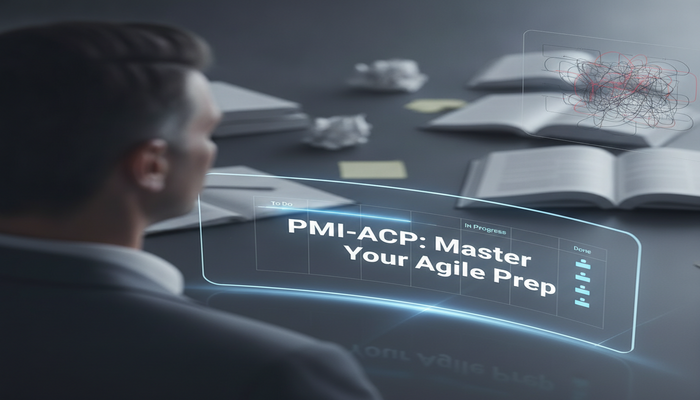
In the rapidly evolving world of project management, agility isn't just a methodology; it's a fundamental mindset. The PMI Agile Certified Practitioner (PMI-ACP)® certification stands as a testament to your expertise in agile principles and practices, a highly coveted credential that can significantly elevate your career. However, many aspiring practitioners fall into the trap of conventional study methods that aren't optimized for the unique demands of an agile certification. If you're wondering how to pass the PMI-ACP exam and truly master agile, it's time to stop studying wrong and adopt a strategic approach.
This comprehensive guide will arm you with the true PMI-ACP prep strategy, detailing everything from eligibility to advanced study techniques. We'll explore the benefits of PMI-ACP certification, unravel the exam's structure, and provide a clear PMI-ACP exam preparation guide designed to maximize your chances of success. By understanding the core tenets of agile and aligning your study plan with PMI's expectations, you won't just pass the exam; you'll emerge as a more confident and capable agile leader.
What is the PMI-ACP Certification?
The PMI Agile Certified Practitioner (PMI-ACP)® is a professional certification offered by the Project Management Institute (PMI) for individuals who work on agile teams or organizations employing agile practices. It recognizes your knowledge of agile principles, values, and various agile methodologies such as Scrum, Kanban, Lean, extreme programming (XP), and Test-Driven Development (TDD). Unlike certifications tied to a single agile framework, the PMI-ACP certification validates your versatility and breadth of understanding across multiple agile approaches, making it an invaluable asset in today's dynamic project environments.
Holding this certification signifies to employers that you possess the hands-on experience and foundational knowledge to lead or contribute effectively within agile project teams. It demonstrates a commitment to professional growth and an understanding of how to apply agile tools and techniques to deliver successful outcomes. Essentially, what is the PMI Agile Certified Practitioner exam testing? It's assessing your comprehensive understanding and practical application of agile principles in real-world scenarios, preparing you for immediate impact.
Benefits of PMI-ACP Certification
Investing time and effort into obtaining your PMI-ACP certification yields numerous professional advantages. One of the most significant benefits of PMI-ACP certification is enhanced career opportunities. Organizations increasingly adopt agile frameworks, leading to high demand for skilled agile practitioners. The PMI-ACP credential sets you apart, signaling to potential employers that you have the validated expertise they need.
Furthermore, the PMI-ACP salary expectations are often higher for certified professionals compared to their non-certified counterparts. Certification can lead to increased earning potential and access to more senior roles. Beyond monetary gains, it boosts your credibility and confidence, allowing you to effectively lead agile initiatives and contribute to organizational success. You also join a global community of agile experts, opening doors for networking and continuous learning. Is PMI Agile Certified Practitioner worth it? For many, the answer is a resounding yes, given the tangible career progression and recognition it provides in the agile space.
PMI-ACP Eligibility Requirements
Before you dive into your PMI-ACP exam preparation guide, it's crucial to ensure you meet the eligibility criteria set by PMI. These requirements are designed to ensure that candidates possess a foundational level of project experience and agile-specific training, validating the integrity and value of the certification. The PMI-ACP eligibility requirements are as follows:
- **General Project Experience**: You must have 2,000 hours of general project experience working on project teams within the last 5 years. This experience is not agile-specific; it can come from any project environment.
- **Agile Project Experience**: In addition to general project experience, you need 1,500 hours of agile project experience within the last 3 years. These hours must be earned using agile methodologies.
- **Agile Training**: You must complete 21 contact hours of training in agile practices. These hours can be obtained through courses, workshops, or training programs focused on agile methodologies.
It's important to document your experience meticulously, as PMI may conduct an audit of your application. Ensure that your agile project experience aligns with recognized agile principles and practices. Meeting these requirements is the first critical step on how to get PMI Agile Certified Practitioner certification.
The PMI-ACP Exam at a Glance
Understanding the structure and logistics of the PMI-ACP exam is vital for effective preparation. This section provides a clear overview of the examination details, helping you strategize your study plan and manage your expectations for exam day. Knowing the format, duration, and passing score contributes significantly to your overall PMI-ACP prep strategy.
Exam Details
- **Exam Name**: PMI Agile Certified Practitioner
- **Exam Code**: PMI-ACP
- **Exam Price**: The PMI-ACP certification cost varies based on your PMI membership status. For PMI members, the price is typically USD $435. For non-members, the full price is USD $495. Becoming a PMI member often provides other benefits, so consider this option.
- **Duration**: You will have 180 minutes (3 hours) to complete the exam. This generous time allowance means you can carefully read and consider each question.
- **Number of Questions**: The exam consists of 120 multiple-choice questions. Of these, 100 questions are scored, and 20 are pre-test questions that do not affect your score but are indistinguishable from scored questions.
- **Passing Score**: PMI does not publish a specific passing percentage. Instead, your performance is reported in proficiency levels: Above Target, Target, Below Target, and Needs Improvement. A 'Target' or 'Above Target' in all domains generally indicates a pass.
Scheduling your exam is a straightforward process once you've completed your application and received approval. You can schedule your PMI-ACP exam through Pearson VUE, PMI's authorized testing partner. It is recommended to schedule your exam well in advance to secure your preferred date and time, ensuring your PMI-ACP exam preparation guide culminates smoothly on exam day.
Stop Studying Wrong: A Strategic Approach to PMI-ACP Prep
Many candidates approach the PMI-ACP with a 'cram and memorize' mentality, which is a recipe for failure. The true PMI-ACP prep strategy focuses on understanding, application, and continuous reinforcement. This isn't just about recalling definitions; it's about internalizing agile principles and knowing how to apply them in complex scenarios. Let's break down the components of an effective strategy for PMI-ACP exam success.
Understanding the PMI-ACP Exam Syllabus Content
The PMI-ACP exam syllabus content is divided into four key domains, each representing a crucial aspect of agile practice. A successful preparation strategy hinges on a deep understanding of these areas, ensuring you allocate your study time effectively to maximize your score. These domains reflect the multifaceted nature of an Agile Practitioner's role, moving beyond simple methodology recall to practical application and mindset:
- **Mindset (28%)**: This domain focuses on the foundational principles, values, and mindset of agile. It encompasses understanding the Agile Manifesto, its 12 principles, and how they translate into daily practices. You'll be tested on your ability to foster collaboration, embrace change, continuous improvement, and customer-centricity. This is more than memorization; it's about internalizing the agile way of thinking and applying it to various scenarios. For instance, questions might revolve around how to handle uncertainty, promote self-organizing teams, or prioritize value delivery. A strong grasp here is crucial, as the agile mindset underpins all other domains and is a common theme throughout the exam.
- **Leadership (25%)**: Agile leadership is distinct from traditional project management leadership. This section examines your understanding of servant leadership, coaching, mentoring, and facilitating teams. It covers conflict resolution, empowering teams, building trust, and effective communication strategies within an agile context. Expect questions on how an agile leader supports team growth, removes impediments, and guides continuous improvement without micromanaging. It's about enabling the team to achieve its goals, fostering a safe environment for experimentation, and championing agile values from within. This domain often intersects with stakeholder management and fostering a collaborative environment.
- **Product (19%)**: This domain delves into the practices associated with product vision, roadmap, and backlog management in an agile setting. It covers techniques like user stories, story mapping, progressive elaboration, and value-driven prioritization. Understanding how to define, refine, and communicate product requirements to ensure continuous delivery of value is key. Expect questions on techniques for backlog refinement, estimating, and maintaining alignment with customer needs and business objectives. This includes understanding iterative development, feedback loops, and how to adapt the product vision based on new information or changing market conditions.
- **Delivery (28%)**: The largest domain, Delivery, focuses on the execution of agile practices. This includes planning, executing, monitoring, and adapting project work. Topics cover various agile frameworks (Scrum, Kanban, XP), continuous integration, test-driven development (TDD), daily stand-ups, retrospectives, and iteration reviews. You'll need to demonstrate knowledge of metrics like burn-down/up charts, velocity, and cumulative flow diagrams. Questions will assess your ability to apply appropriate agile techniques to manage sprints, releases, and maintain flow. It's about ensuring the team efficiently and effectively delivers high-quality, working increments of the product.
By breaking down the PMI-ACP exam syllabus content in this manner, candidates can formulate a targeted study plan that addresses their individual strengths and weaknesses, ensuring a comprehensive understanding of each critical area.
Mastering Agile Principles for PMI-ACP
At the heart of the PMI-ACP certification lies a deep understanding of Agile principles for PMI-ACP. This is not about rote memorization of terms, but rather an internalization of the agile mindset, values, and the 'why' behind each practice. Dive into the Agile Manifesto and its 12 supporting principles, as they form the philosophical bedrock of all agile methodologies. Understand concepts like continuous improvement, collaboration, customer collaboration, responding to change, and delivering working software frequently.
Familiarize yourself with various agile methodologies such as Scrum, Kanban, Lean, Extreme Programming (XP), and Feature Driven Development (FDD). While the exam doesn't focus on one specific framework, it tests your ability to choose and apply the right agile tool or technique for a given situation. This requires a nuanced understanding of their strengths, weaknesses, and appropriate contexts. A solid grasp of these principles and frameworks is non-negotiable for anyone aspiring to become a PMI Agile Certified Practitioner.
Leveraging Official PMI-ACP Study Materials
To ensure your preparation is aligned with PMI's expectations, it's imperative to leverage official PMI Agile Certified Practitioner study materials. The primary resource is the Agile Practice Guide. This guide, developed jointly by PMI and the Agile Alliance, provides essential context and foundational knowledge for agile project management. It covers various agile approaches, tools, and techniques that are directly relevant to the exam syllabus. Read it thoroughly, paying attention to the nuances and definitions provided.
Another invaluable resource is the PMI Agile Certified Practitioner (PMI-ACP)® PMI Study Hall®. This digital product offers comprehensive study content, practice questions, and full-length practice exams designed to mimic the actual exam experience. Utilizing Study Hall can significantly enhance your understanding of question styles and help you identify areas needing more focus. Combining these official resources forms the cornerstone of an effective PMI-ACP exam preparation guide, ensuring you're studying the most accurate and relevant information.
Choosing the Best PMI-ACP Training Courses
While self-study is feasible, enrolling in quality training courses can significantly boost your understanding and provide structured learning. For those seeking comprehensive guidance, PMI offers an official PMI Agile Certified Practitioner (PMI-ACP)® Exam Prep Course. This course is specifically designed to cover all exam objectives and help you meet the 21 contact hours requirement. It provides in-depth content, exercises, and insights directly from PMI.
Alternatively, many individuals opt for instructor-led training. PMI partners with Authorized Training Partners (ATPs) who offer Instructor-Led PMI-ACP® Exam Prep Courses. These courses often provide interactive learning environments, opportunities for peer discussion, and direct access to experienced instructors who can clarify complex concepts and share practical application tips. When choosing a course, look for one that aligns with the current exam content outline and offers a blend of theoretical knowledge and practical exercises. The best PMI-ACP training courses will prepare you not just to pass the exam, but to excel in real-world agile environments.
Effective PMI-ACP Exam Preparation Guide
A disciplined and strategic approach is essential for mastering the PMI-ACP. Here's an effective PMI-ACP exam preparation guide:
- **Create a Study Plan**: Based on the syllabus domains, allocate study time proportional to the weight of each domain. Identify your weakest areas early and dedicate extra time to them. Consistency is key; aim for regular study sessions rather than last-minute cramming.
- **Focus on Concepts, Not Just Memorization**: The PMI-ACP exam emphasizes situational judgment and application. Understand the 'why' behind agile practices. For example, instead of just memorizing the ceremonies in Scrum, understand their purpose, benefits, and how they contribute to value delivery and continuous improvement.
- **Active Learning Techniques**: Don't just read. Engage with the material through active recall, creating flashcards for key terms, or explaining concepts in your own words. Teaching a concept to someone else is a powerful way to solidify your understanding.
- **Utilize Diverse Resources**: While official PMI materials are paramount, consider supplemental books, articles, and reputable online communities. Different perspectives can often clarify challenging topics.
- **Simulate Real-World Scenarios**: Think about how agile principles would apply in your own work experiences. The exam often presents scenarios, so practicing critical thinking and decision-making from an agile perspective is crucial. For a broader perspective on similar certifications, you might find value in exploring a comprehensive guide to other PMI certifications.
- **Manage Your Time**: During practice sessions, get accustomed to answering questions within the allocated time. The exam has 120 questions in 180 minutes, which means an average of 1.5 minutes per question. Pacing is critical.
- **Review and Reflect**: After completing practice questions or mock exams, thoroughly review your answers—especially the incorrect ones. Understand why your answer was wrong and why the correct answer is indeed correct. This learning from mistakes is a powerful accelerator for your preparation.
The Power of PMI Agile Certified Practitioner Practice Exam
One of the most critical components of any successful PMI-ACP prep strategy is the rigorous use of a PMI Agile Certified Practitioner practice exam. Practice exams are not just for testing your knowledge; they are powerful learning tools. They help you:
- **Familiarize with Question Format**: Understand the type of questions asked, including situational, conceptual, and definition-based questions.
- **Identify Knowledge Gaps**: Pinpoint specific areas where your understanding is weak, allowing you to focus your subsequent study efforts more effectively.
- **Improve Time Management**: Practice answering questions under timed conditions, which is crucial for completing the 120-question exam within 180 minutes.
- **Build Stamina**: Three hours is a long time to concentrate. Practice exams help build the mental stamina required for the actual test.
- **Reduce Exam Anxiety**: Gaining familiarity with the exam experience through practice can significantly reduce stress and boost confidence on test day.
Look for practice exams that offer detailed explanations for both correct and incorrect answers. Utilize the PMI Study Hall® for authentic questions and a realistic testing environment. Aim to take several full-length practice exams in the weeks leading up to your actual test date. Analyze your performance in each domain and use the results to refine your study plan further.
Is PMI Agile Certified Practitioner Worth It?
Many professionals ponder, 'Is PMI Agile Certified Practitioner worth it?' The answer lies in the growing global demand for agile expertise. Organizations across industries are adopting agile methodologies to enhance flexibility, speed to market, and customer satisfaction. This shift has created a significant need for certified agile professionals who can lead these transformations.
The PMI-ACP certification validates your broad knowledge of agile principles and practices, making you a versatile asset capable of working across various agile frameworks. It signals to employers your commitment to professional development and your ability to drive successful outcomes in dynamic environments. Beyond the tangible benefits of career advancement and increased salary expectations, the certification empowers you with a deeper understanding of agile, enabling you to contribute more effectively to your teams and organizations. For those committed to an agile career path, the PMI-ACP is an invaluable investment.
How to Get PMI Agile Certified Practitioner Certification
The journey to obtaining your PMI Agile Certified Practitioner certification involves several structured steps:
- **Meet Eligibility Requirements**: First, ensure you satisfy the general project experience, agile project experience, and agile training hours as outlined earlier.
- **Submit Your Application**: Complete and submit your online application through the PMI website. Be prepared to detail your project experience and agile training. PMI may conduct an audit, so keep accurate records.
- **Pay the Exam Fee**: Once your application is approved, pay the exam fee. Remember the PMI-ACP certification cost difference for members versus non-members.
- **Schedule Your Exam**: Use the Pearson VUE platform to schedule your exam at a time and location convenient for you.
- **Prepare Diligently**: Follow a strategic PMI-ACP exam preparation guide, leveraging official study materials, training courses, and practice exams.
- **Pass the Exam**: Successfully complete the 180-minute, 120-question examination.
- **Maintain Your Certification**: Once certified, you'll need to earn 30 Professional Development Units (PDUs) in agile topics every three years to maintain your PMI-ACP credential.
By following these steps, you'll be well on your way to earning one of the most respected agile certifications in the industry.
PMI-ACP Certification Renewal
Maintaining your PMI-ACP certification is just as important as earning it. The PMI-ACP certification renewal process ensures that certified professionals continue to develop their skills and stay current with evolving agile practices. To maintain your PMI-ACP credential, you must earn 30 Professional Development Units (PDUs) in agile topics every three years. These PDUs can be obtained through various activities, including:
- Attending agile-focused webinars, seminars, or conferences.
- Taking relevant online courses or training programs.
- Volunteering your time to agile communities or projects.
- Creating content, such as writing articles or giving presentations on agile topics.
- Working as an agile practitioner.
PMI's Continuing Certification Requirements (CCR) program provides a framework for PDU categories and activities. Proactively tracking your PDUs and reporting them to PMI is crucial to avoid your certification lapsing. This continuous learning aspect reinforces the value of the PMI-ACP, demonstrating an ongoing commitment to excellence in agile project management.
Conclusion
Mastering the PMI-ACP certification is a journey that demands more than conventional studying. It requires a strategic shift in your approach, focusing on deep understanding, practical application, and continuous engagement with agile principles. By embracing the 'Stop Studying Wrong' philosophy, you can move beyond rote memorization to truly internalize the agile mindset, making your preparation more effective and your eventual certification more impactful.
We've covered everything from the foundational PMI-ACP eligibility requirements and the nuances of the exam structure to the most effective study materials and practice strategies. Remember, success hinges on leveraging official PMI resources, understanding the syllabus domains thoroughly, and consistently challenging your knowledge through practice exams. Embrace this true PMI-ACP prep strategy, and you won't just pass the exam; you'll elevate your career as a highly competent and respected Agile Certified Practitioner. For those eager to deepen their understanding of other project management credentials, consider a deep dive into project management certifications to broaden your expertise.
Frequently Asked Questions (FAQs)
1. What is the main difference between PMI-ACP and other agile certifications?
The PMI-ACP certification distinguishes itself by validating a broad understanding of various agile methodologies (Scrum, Kanban, Lean, XP, etc.) rather than focusing on a single framework. It also requires prior project experience, emphasizing real-world application of agile principles, which sets it apart from more entry-level or framework-specific certifications.
2. How long does it typically take to prepare for the PMI-ACP exam?
Preparation time varies greatly depending on your existing agile knowledge and experience. On average, candidates spend 2-4 months of dedicated study. This includes fulfilling the 21 contact hours of agile training and then committing to consistent self-study, reviewing official materials like the Agile Practice Guide, and taking numerous practice exams.
3. Are there any prerequisites for taking the PMI-ACP exam?
Yes, PMI has specific eligibility requirements. These include 2,000 hours of general project experience within the last 5 years, 1,500 hours of agile project experience within the last 3 years (in addition to the general experience), and 21 contact hours of agile training. All experience must be non-overlapping.
4. What study materials are considered essential for PMI-ACP preparation?
The most essential study materials are official PMI resources. This includes the Agile Practice Guide, which is fundamental, and the PMI Agile Certified Practitioner (PMI-ACP)® PMI Study Hall®. Many candidates also find value in official PMI-ACP Exam Prep Courses (either self-paced or instructor-led) and reputable third-party practice exams.
5. How often do I need to renew my PMI-ACP certification?
The PMI-ACP certification must be renewed every three years. To maintain your credential, you are required to earn 30 Professional Development Units (PDUs) related to agile topics during each three-year cycle. These PDUs ensure continuous learning and development in the agile field.


 Posts
Posts


0 comments:
Post a Comment